
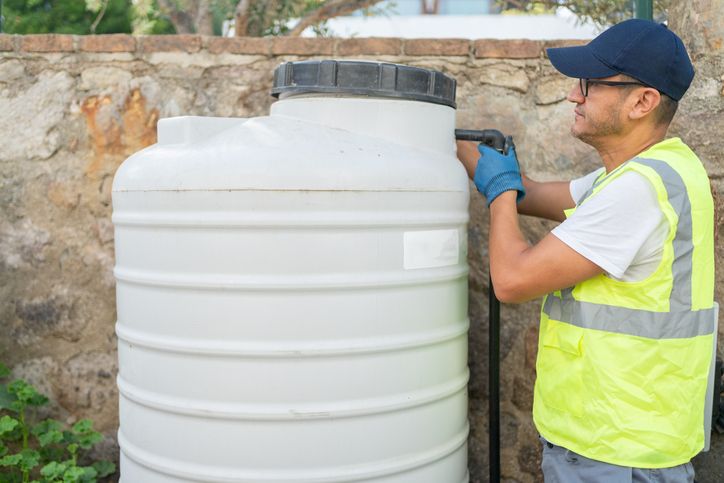
Why Holding Tanks Are Essential for Job Site Waste Storage and Remote Site Sanitation
In places where there is no permanent infrastructure, waste management can be a challenge. How can you remain in compliance with local regulations and provide safe, reliable waste management at a job site, outdoor event, or other remote location? Holding tanks are the solution to your problem, containing waste in a controlled system until it can be removed from the site. Using holding tanks prevents soil contamination, as well as the contamination of nearby water sources, and a system that incorporates holding tanks is safe and efficient, perfect for responsible waste management that protects health and safety effectively.
What is a Holding Tank? How does a Portable Restroom Holding Tank Differ from Other Tanks?
Put simply, a holding tank is a place to temporarily store gases, liquids, or solids, until they can be moved to their appropriate destination. Holding tanks can store a wide range of things, from food to hazardous materials. Most of the time, though, they’re used to hold water, typically in wastewater systems. One type of wastewater system that employs holding tanks is the portable restroom, and the tanks used in portable restrooms aren’t like food containers. Rather, they are sealed containers, made from materials that help contain odors, and they use chemicals to help break down waste. These tanks typically use gravity to pull the waste in, and then they’re vacuumed out before they get too full. Essentially, though, holding tanks hang onto waste, so that it doesn’t go directly into the environment.
The Importance of Long-term Sanitation Solutions for Job Sites
On a long-term job site, or a lengthy event in a remote location, proper sanitation is crucial. Holding tanks provide a valuable service, increasing the capacity of portable toilets, so that they don’t have to be serviced as often. Note: they should be emptied before they’re all the way full, to prevent odors. However, the holding tanks themselves also work to limit odors, and they also help businesses stay in compliance, because it’s easier to keep a job site sanitary if you have ample space for waste storage.
Portable Restroom Holding Tank Capacity and Durability Features
The holding tank for a portable restroom must be sturdy, to stand up to challenging conditions. It would be unfortunate for a tank to fail, because that could negatively impact safety, efficiency, and overall operations. Premature tank deterioration can be an issue if the tank is not tough enough to resist UV damage, remain weather resistant, and resist cracking under pressure. Portable restroom holding tanks should be made of UV-stabilized, weather resistant materials that will remain in good condition, even when the weather is harsh. Well-made tanks are also made with uniform wall thickness, steady support at the base, and the right structure to withstand operational duress. They come in a variety of sizes, with capacities ranging from 50 gallons to 150 gallons. To put that into perspective, a bathtub holds about 30 gallons, so even the smallest portable toilet holding tank holds more than a bathtub. They’re deceptively small, but capable of holding enough waste to make the portable toilet significantly more efficient.
Installation and Maintenance Considerations
Whether your holding tank is storing freshwater or wastewater, there are several factors that need to be considered. The tank needs to be appropriately sized, and in good condition, so that it doesn’t release wastewater into the environment. Holding tanks and portable toilets need to be positioned in a way that makes it easy for them to be serviced, with plenty of room to facilitate access. They also need to be installed in accordance with local regulations, including regulations that cover installation, maintenance, and pumping frequency. Maintenance should be on a regular schedule, and the tanks should be emptied before they reach their full capacity, to reduce the possibility of overflow.
Common Use Cases
Holding tank rental is useful for many different applications. Some holding tanks hold freshwater, and water pumps are used to deliver running water to restroom trailers and other spots where there is no running water. Construction sites that don’t have direct access to running water, as well as remote locations and outdoor events like concerts, fairs, and weddings, use holding tanks and pumps to provide clean water. These can be useful in an emergency, too, helping to maintain the water supply until utilities are restored. Sometimes, holding tanks are used to store stormwater runoff, and some holding tanks are used in the treatment of wastewater. Holding tanks can also be used in agriculture and landscaping, to store and transport water for irrigation and maintenance.
For Holding Tank Rental, Contact Complete Site Solutions
Whether you’re setting up a job site or an outdoor event, cleanliness should be at the top of your priorities. That’s why one of your first calls should be to Complete Site Solutions, a family-owned and operated business that provides portable toilets and sanitation services, offering personalized service and exceptional customer care. Our dedicated team is on a mission to elevate the quality of portable toilets and sanitation services, providing our customers with the outstanding cleanliness and accessibility. This commitment to excellence has made us the local leader for portable toilet rentals in New Jersey, Pennsylvania, and Delaware, and we handle projects of any size and scope with the attention and care you’d expect from a family-run business. Contact us now for more information about how we can help you plan your next event or outfit your work site.